The short version
A store with no audience, no reviews and no sales history can still get moving fast if the first months are planned well. Aurece started exactly that way in August 2025. By April 2026 it had passed $277K in gross sales.
We're Sociyell, a D2C content agency and we looked after Aurece's content and social growth from week one. This post walks through what we did and why, in plain terms, so you can use the same ideas. Think of it as a real example of AI content production for D2C brands, paired with creator-led Instagram. It also shows what AI marketing for D2C looks like when someone plans the calendar instead of posting whenever there's time.
Meet Aurece
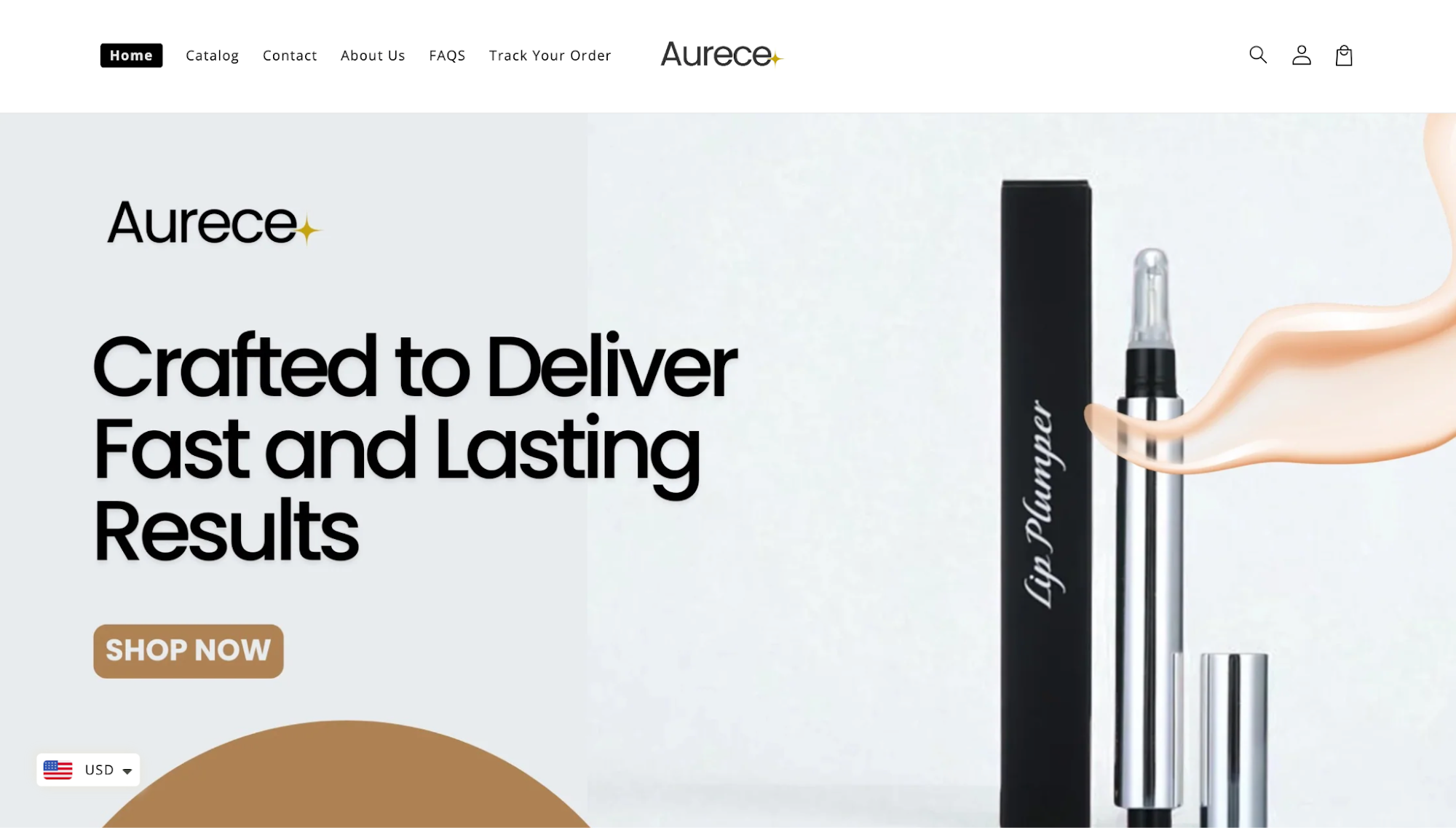
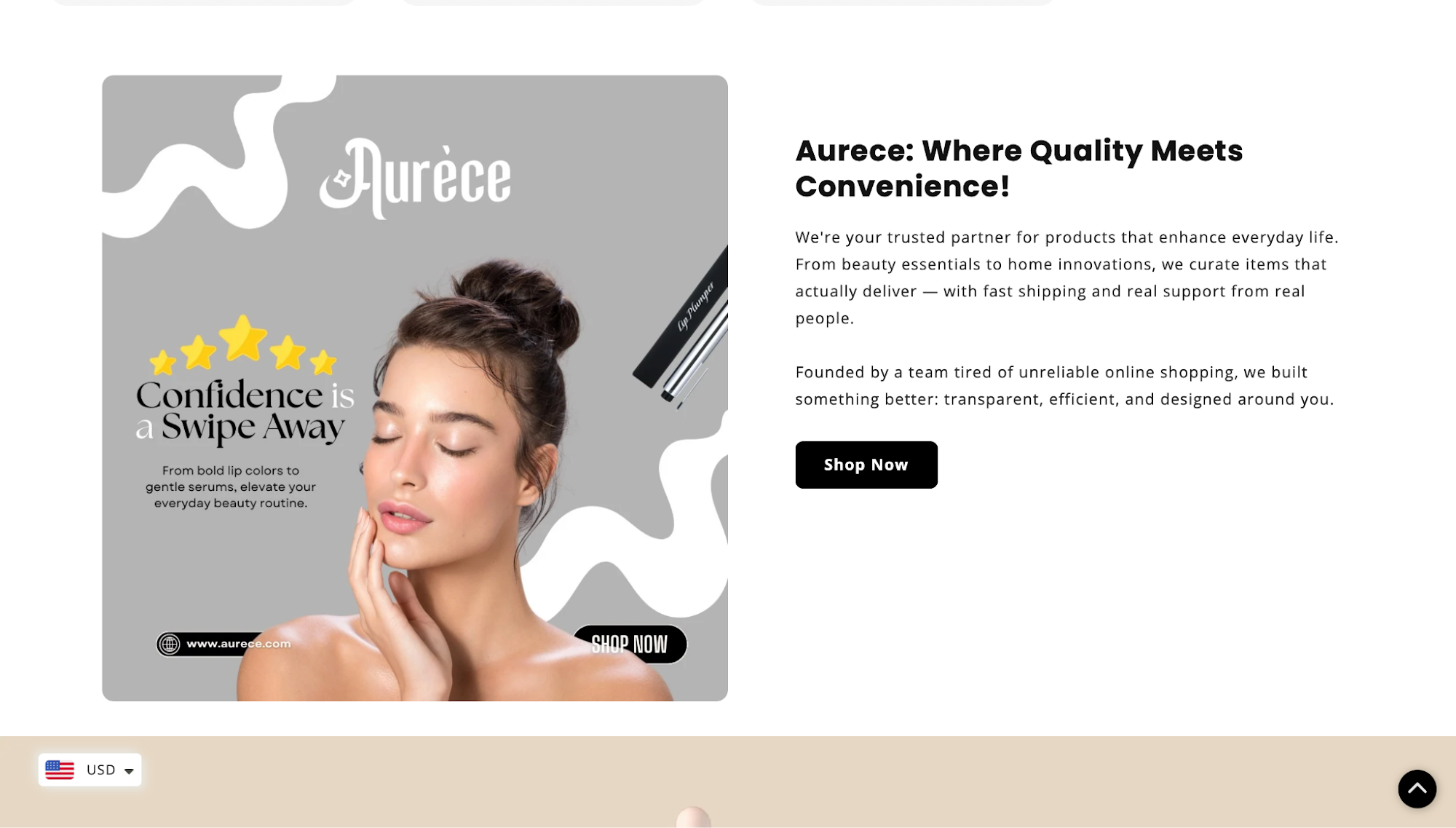
Aurece is a curated lifestyle store. It sells beauty essentials, personal care products and clever everyday home finds, mostly priced between $20 and $35 and it ships worldwide. The store went live in the first days of August 2025 with a $0 starting point.
Aurece is our client and it's an ecommerce venture our client runs separately from their other work. We were responsible for how it showed up on social media and how its content got made. Starting from nothing is a common situation for a new store and it's where a D2C content agency does its most useful work.
The challenge: Why a multi-category D2C store is hard to launch
When you sell a wide range at impulse-buy prices, discovery decides everything. Four problems stood out for Aurece.
1. No brand awareness
Nobody searches for a store they've never heard of. Search and ads can catch people who are already looking, but a new name has to be put in front of people first.
2. No hero product
Many stores grow around one famous item. Aurece didn't have one and a catalogue this broad can't be carried by a single product. Attention had to be created for the whole range, again and again.
3. No trust signals
A first-time visitor lands on a store with zero reviews and no history. At $20 to $35 the risk is small, but people still hesitate when they can't tell whether a store is real.
4. Q4 pressure
The last quarter of the year decides a lot for any D2C brand and the scale of it is hard to ignore. US shoppers spent a record $257.8 billion online between November 1 and December 31, 2025, according to Adobe, which was up 6.8% on the year before. A store launched in August had about three months to get ready for that.
What Aurece needed
Three things: a constant stream of new people seeing the right product, trust built quickly enough to convert them and a plan for Q4 from the start. Posting more doesn't solve any of that. A system does and that's where AI marketing for D2C earns its place when it's used well.
Our approach: The Sociyell growth engine
We built the whole plan around Instagram, with creators as the engine rather than a nice extra. Each part feeds the next:
We start with who buys, make content they care about, put creators behind it, add offers once attention is earned and make sure people who go looking can find the store. As a D2C content agency, we treat these as one connected system, not five separate jobs.
1. Audience first, product last
Before posting anything, we studied the buyer: who they are, where they spend time on Instagram and what makes them stop, save or share. Most shoppers browse on their phones. Adobe found that mobile made up 56.4% of online holiday transactions in 2025, so content has to look right in a feed first.
Then we made content that was worth watching without selling anything. Products came in only after attention was earned. We've refined this order over years of testing and it's the reason content converts instead of just collecting views. A shopper who has seen you offer something useful three times behaves differently from one who meets a price tag on first contact.
2. AI content production for D2C brands: How it fit in
A catalogue this size needs a steady flow of fresh content and traditional shoots can't keep up with that. This is where AI content production for D2C brands makes a practical difference. Our AI Gen service turns the photos, clips and rough material a brand already has into polished, on-brand content built for volume and speed. You can see the look on our site: the Aurece InstaSkin foundation stick flat lay is an AI product visual we made for the brand.
Here's how the work flows on our side. We collect the raw material, plan what each piece is for on the content calendar, produce it, publish it and then watch what performs so the next batch improves. The formats for Aurece were product visuals and short clips built to fit Instagram. A person on the team checks each piece against the brand before it goes out.
This is the practical side of AI marketing for D2C: AI makes the making faster and people still decide what's worth making. It's also becoming standard practice. In Ahrefs' 2026 survey, 93% of marketing and SEO professionals said they use AI to create or help create content, up from 87% the year before. The same Ahrefs research found that only about 7% publish AI content mostly unedited, which shows how much of the industry still puts a human check in the middle.
3. The creator engine, not a creator campaign
This was the biggest part of the strategy. Instead of one influencer push, we ran creators all year, mixing micro and mega influencers and mixing barter and paid collaborations.
Micros bring trust and keep costs sensible. According to Ringly's 2026 influencer marketing statistics, Instagram micro-influencers average 3.86% engagement against 1.21% for mega-influencers and they typically charge $100 to $1,000 per post. Brands have noticed: 70% now say they prefer nano or micro creators (Moburst), compared with 17% who prefer macro (VoxBooster). Megas give reach, the fast burst of attention that micros can't match on their own.
The cadence mattered as much as the mix. With collabs landing steadily, Aurece was always in someone's feed, so people met the brand more than once before they were asked to buy.
4. Always-on Instagram campaigning
Product content, creator content and offers all run on one calendar. That sounds like a small detail, but it's what stops a store going quiet between collabs. When a creator posted, their audience arrived at a profile that already looked active and many had already seen Aurece before, so the visit felt familiar rather than cold.
This steady rhythm is the daily work of our social media growth and management service. Brands often ask a D2C content agency to "just post more," but the real gain comes from making sure every post, collab and offer is pointed at an audience that's already warm.
5. Q4, planned instead of stumbled into
We stepped up collab density going into Black Friday, Cyber Monday and the holiday run, when shoppers are in buying mode and a $20 to $35 catalogue makes easy gifts. The timing was worth it. Cyber Week, the five days from Thanksgiving to Cyber Monday, brought in $44.2 billion in US online sales in 2025, up 7.7%. Social media's share of holiday revenue also grew to 4.6%, up from 3.3% the year before. It's a small slice of the total, but a fast-growing one.
6. Found beyond Instagram
Not everyone arrives from Instagram. We also worked on SEO and LLMO so Aurece shows up in Google results and in AI assistant recommendations such as ChatGPT. That catches the buyer who heard about the store in one place and went searching for it in another. If LLMO is new to you, our LLMO guide explains it and you can read about our SEO and LLMO service.
Launching a store or stuck after launch? We'll map the same engine to your brand. Talk to Sociyell.
The timeline: Nine months at a glance
We've kept this to what the data supports.
Launch (August 2025): The store opened with no audience and took 756 orders and $24.6K in its first month.
Build and baseline (September to October): The creator cadence began to build a steady base of organic and search-driven orders.
Q4 push (November to December): Collab density stepped up. November became the best month at $41K and the full quarter reached $104K.
Post-holiday and scale (January to February): The baseline held after the season ended. March's 110% growth implies February was around $16K.
Breakout (March to April 2026): March delivered $34K and the store's biggest day, passing $10K.
The results: The numbers behind the growth
AI marketing for D2C only counts if it shows up in the numbers, so here they are.
1. Headline results
2. Month one: From $0
The first month produced 756 orders and $24.6K in sales. We think this is the most telling number in the case study, because it came before reviews, before a known name and before any repeat customers.
3. The BFCM and Q4 story
November 2025 was the best month: $41K and 1,104 orders, up 61% on sales and 73% on orders from October. Daily sales climbed to nearly $6K over Black Friday weekend. Across the full quarter, Q4 brought in $104K, about 42% of the nine-month total in a third of the time.
4. The March breakout
March 2026 delivered $34K, up 110% on the month before and the store's record day passed $10K. Momentum from Q4 didn't fade after the holidays, which is what a rising baseline looks like.
5. Reading the daily sales chart: Baseline plus spikes
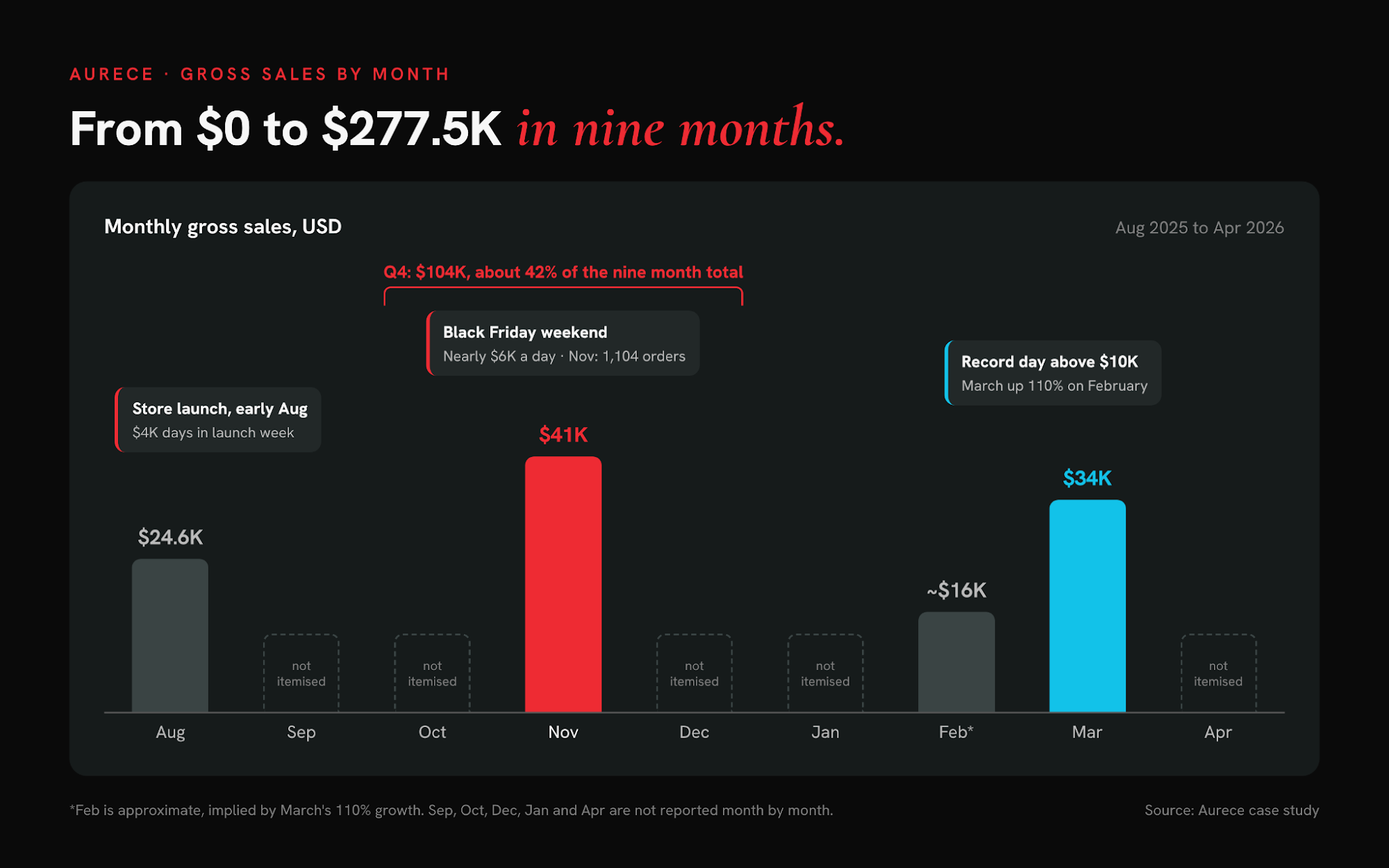
If you look at the chart, you can see the strategy without reading a word about it. There's a steady line of organic and search-driven orders and on top of it sharp spikes every time a creator goes live. There were $4K days in launch week, a climb toward $6K a day around Black Friday and the big March peak. That shape of a baseline with spikes is what a planned creator calendar looks like. Sporadic collabs tend to produce a flat line with the occasional bump.
Why it worked
Three things compounded. First, audience analysis meant every creator, product and post was pointed at people who were already likely to buy. Second, running creators all year kept the baseline rising between spikes instead of resetting to zero after each push. Third, stacking collab density into Q4 turned the season every D2C brand fights over into the store's best quarter by a wide margin.
AI content production for D2C brands made the volume possible and the strategy gave that volume somewhere to go.
What the client said
We started Aurece with no audience, no reviews and no sales. Sociyell took content production off our plate completely, and their Gen AI production kept fresh product content coming, so we could put our time into running the business. Nine months in we'd passed $277K in sales, and March gave us our biggest day yet.
Key takeaways for D2C brands
- Research the audience before you post. Know who buys and where they scroll before you plan a single piece of content.
- Run creators all year. A steady cadence builds a baseline that one-off pushes can't.
- Plan Q4 early. Collab slots, creative and offers take time and good creators book up.
- Use AI marketing for D2C to produce more, not to publish unchecked. Speed is the benefit and brand judgment protects it.
- Cover search as well as social. A good D2C content agency will pair Instagram with SEO and LLMO so buyers who go looking can find you.
The short version is that Instagram can launch a store, not just promote one.
Frequently asked questions
How long does it take to launch a D2C brand on Instagram?
It depends on the category and budget, but Aurece is one data point: four-figure days within its first week and a six-figure quarter within four months. AI marketing for D2C speeds up the content side, though the audience work still takes real time.
How much does influencer marketing cost for a new D2C store?
Micro-influencers on Instagram typically charge $100 to $1,000 per post, according to Moburst, and barter collaborations can lower cash costs further. Industry benchmarks from Influencer Marketing Hub put average returns at around $5.20 for every $1 spent, though results vary a lot by category.
Should a D2C brand use micro or mega influencers?
Both, for different jobs. Micros bring higher engagement and trust and megas bring reach. Aurece used both on one calendar.
How does AI content production for D2C brands work?
It starts with the raw material a brand already has, such as product photos, clips and ideas and uses AI tools to turn them into on-brand content at volume. A person then reviews and shapes the output so it still feels like the brand. You can read more on our AI Gen page.
How do you prepare a D2C brand for Black Friday?
Start early. Cyber Week accounted for about 17% of total US online holiday spending in 2025, according to Adobe, so line up creators, creative and offers well before November and build audience warmth through the autumn.
What does a D2C content agency do?
A D2C content agency plans, produces and publishes the content that gets a direct-to-consumer brand noticed, then ties it to growth through social media, creators and search. That's what we did for Aurece.
Want results like Aurece's?
If you're launching a store or trying to grow one, we can build the same kind of engine around your brand. Start with our AI Gen service for AI content production for D2C brands, or our social media growth and management service. You can also get in touch and tell us where you're starting from. We're a D2C content agency that treats AI marketing for D2C as a way to make more of your best work, not a replacement for it.
Related reading:What is LLMO? · SEO and LLMO · More from the Sociyell blog
Client website screenshots